What it is
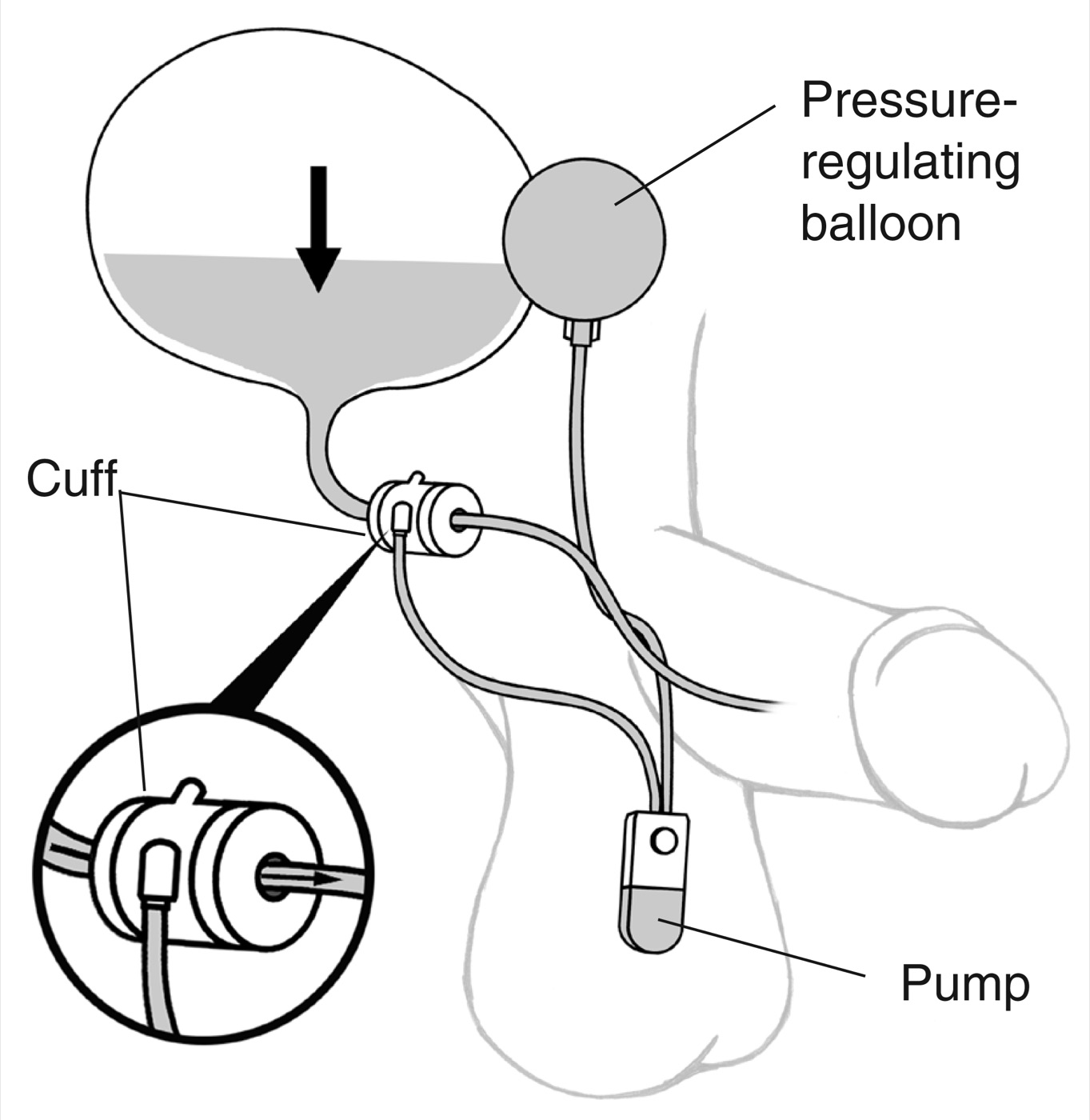
An artificial urinary sphincter has three connected parts, all under the skin:
- A soft cuff around the urethra that squeezes it closed to keep you dry
- A pump in the scrotum that you press when you want to urinate
- A small balloon in the lower belly that sets the pressure
The cuff stays closed most of the time. When you need to urinate, squeeze and release the pump a few times. The cuff opens and you urinate. A few minutes later it closes again on its own.
Who it suits
The AUS is the most reliable choice for any level of leakage, and the usual choice after radiation. You work the pump yourself, so tell your team if you have trouble using your hands.
Most men improve over the first 6 to 12 months after prostate surgery. If leakage still bothers you and is not improving, surgery can be considered from about 6 months. It is usually offered at 1 year.
Before you decide
- Most men are much better, though not always fully dry.
- More surgery is common over the years. The device can wear out, or the urethra can thin under the cuff. About 6 in 10 men have not needed another operation 5 years later, and about 4 to 6 in 10 need a repair or new device within 10 years.
- Risks, including infection, are higher after radiation, earlier urethra surgery or removal of an earlier sphincter.
Getting ready
- Follow your surgery instructions about eating, drinking and which medicines to stop, including blood thinners.
- A urine test checks for infection, and any infection is treated first. You wash with antiseptic soap and get antibiotics.
- Stop smoking and vaping.
- Tell your team if you have had pelvic radiation, earlier urethra or leakage surgery, or have diabetes.
How it is done
- You get general or spinal anesthesia and antibiotics.
- Through small cuts, the surgeon places the cuff, balloon and pump, all under the skin.
- The device is filled and tested, then left turned off so you can heal.
Afterward
Many people go home the same day. Expect soreness, swelling and bruising of the scrotum and the area behind it for a couple of weeks.
The device stays off for 6 weeks, and you still leak until it is turned on at a visit (activation). It must be turned off before any catheter is passed. Show your implant card to any care team.