What they are
All three operations work through a scope in the urethra. They take away the inner prostate tissue that squeezes the urine channel, and most men get a much stronger stream. TURP and HoLEP, along with simple prostatectomy, open the channel the most and have the longest record of lasting results.
TURP (transurethral resection of the prostate)
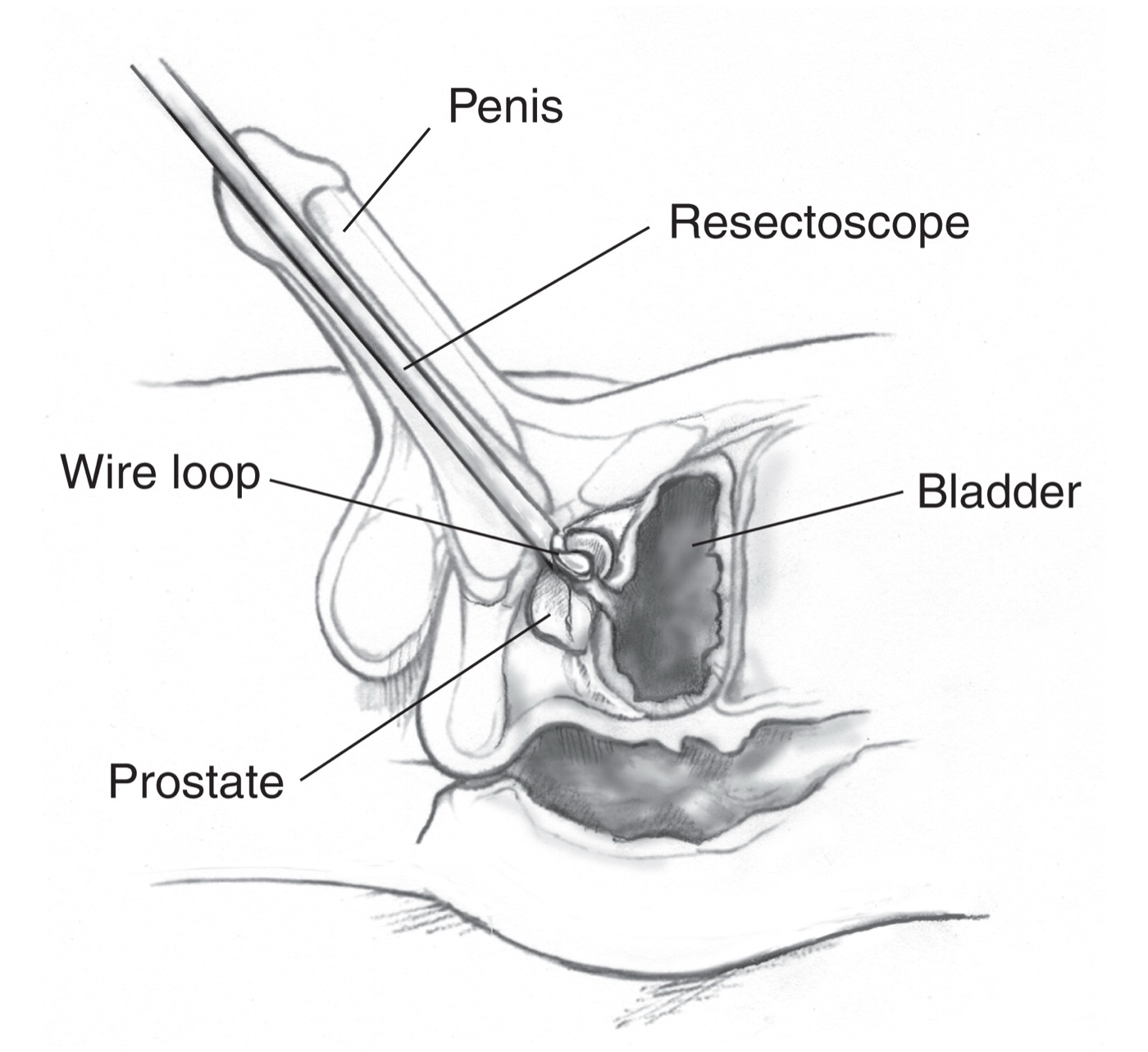
TURP is the long-standing standard surgery for an enlarged prostate. A small electric wire loop removes the blocking tissue piece by piece, and the outer part of the prostate stays in place.
- It works best for small to medium prostates.
- 95 in 100 men would choose the same surgery again 1 year later.
- 6 to 7 in 10 men have little or no semen afterward.
- 2 to 10 in 100 later get scar tissue that narrows the urine channel. Scar tissue can be treated.
- Lasting leakage is rare. New leakage is more likely after past radiation to the prostate.
- The catheter usually comes out in 1 to 3 days. The bladder may be rinsed for the first day.
HoLEP (holmium laser enucleation of the prostate)
A laser peels the whole inner prostate away from its outer shell, like peeling an orange. The freed tissue is cut into small pieces and removed, then checked under a microscope. Sometimes a small prostate cancer is found, and many of these are slow-growing.
- It works for a prostate of any size, including very large ones that once needed open surgery.
- It bleeds less than TURP. It can often be done if you take blood thinners, but bleeding problems are more likely and the catheter may stay in longer.
- 5 to 7 in 10 men have little or no semen afterward.
- 1 to 3 in 100 have urine leakage that lasts, and 1 to 3 in 100 later get scar tissue that narrows the urine channel.
- Some men have urgency or leakage with coughing or lifting for weeks to months. This usually gets better, and pelvic floor exercises help.
- The catheter usually comes out soon, often in about a day.
GreenLight laser (photoselective vaporization)
A green laser turns the blocking tissue into vapor, layer by layer, and seals blood vessels as it goes. The outer part of the prostate stays in place. In a large trial, results at 2 years were as good as TURP.
- The best evidence is for small to medium prostates. Very large prostates more often need another treatment later.
- Because it bleeds little, it can be an option if you take blood thinners.
- 6 in 10 men had the catheter out the day after surgery.
- 8 in 10 needed no further prostate treatment 10 years later, and 9 in 10 at 5 years. Over 5 to 10 years, more men need a repeat procedure after GreenLight than after HoLEP.
- About 7 in 10 have little or no semen afterward. A technique that spares the area around the ejaculation ducts may lower this risk.
- No tissue is saved for the lab, so it is not checked for prostate cancer.
- Burning and urgency in the first weeks are more common than after TURP.
Ejaculation and erections
The most common lasting change after all three is retrograde ejaculation: semen goes back into the bladder, so little or no fluid comes out. You usually still have an orgasm, though it may feel a little different. It is harmless, but it can make it harder to father a child. Most men notice no change in erections after TURP or HoLEP. After GreenLight, erection scores in studies were similar to TURP over the first year and slightly lower at 2 years.
Getting ready
- Follow your instructions about eating, drinking and which medicines to stop, including blood thinners. Do not stop them on your own.
- A urine test checks for infection first.
- Before HoLEP, your team may teach you pelvic floor exercises.
- Arrange a ride home.
How it is done
- You get spinal or general anesthesia, so you feel nothing, and antibiotics.
- A scope is passed up the urethra.
- The blocking tissue is trimmed, peeled out or vaporized.
- A catheter is placed to drain the bladder while it heals.
Afterward
Like any surgery, these operations have risks, including bleeding, infection and trouble urinating at first. Pink urine and burning settle over a few weeks. Pyridium may be offered for burning. If your stream gets weak again months or years later, tell your team.