What it is
A penile implant is for men whose erection problems have not improved with pills, injections or other treatments, or who prefer an implant after learning about all the choices. Both types are placed through one small cut and are hidden inside the body.
Inflatable implant
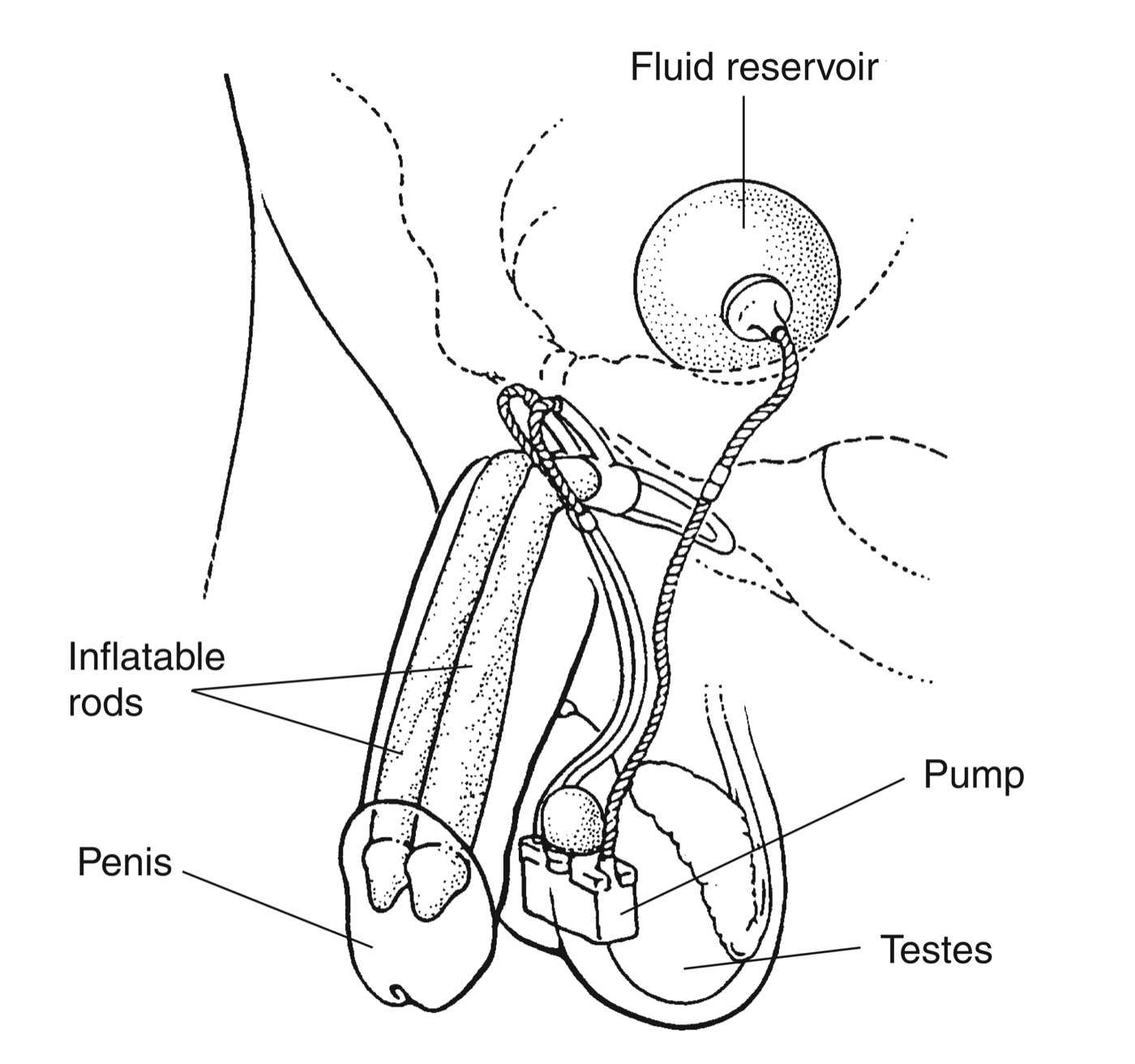
The inflatable implant has three parts, all under the skin:
- Two cylinders inside the penis that fill with fluid to make it firm
- A pump in the scrotum
- A small reservoir of fluid in the lower belly
Squeeze the pump several times to fill the cylinders. When you are done, press the release on the pump to go soft. You decide when, and for how long. You are taught to use it at a visit 6 weeks after surgery (activation). You work the pump yourself, so tell your team if you have trouble using your hands.
Malleable (bendable) implant
A malleable implant is a pair of firm, bendable rods, one in each erection chamber of the penis. There is no pump. You bend the penis up to have sex and down to hide it under clothing.
- It is the simplest implant to use, and a good choice if working a pump would be hard, for example with weak or stiff hands.
- It has no fluid parts to leak, but it can still break or need a repair. About 1 in 7 men need another operation to repair or remove it within 5 years.
- The penis stays firm all the time, so it can be harder to hide than the inflatable type.
- It will not make the penis longer.
Before you decide
- It is permanent. After surgery, natural erections, pills and injections no longer work. The implant becomes how you get an erection. Never inject erection medicine into the penis once you have an implant.
- Your desire and orgasm stay. Urination and ejaculation usually do not change.
- The erection is different. It may seem shorter, narrower or less sensitive than your natural erections were. The head of the penis does not get firm.
Getting ready
- Preventing infection matters most. Any infection, including a urine infection, is treated first. You wash with antiseptic soap and get antibiotics.
- Stop smoking and vaping. If you have diabetes, get your blood sugar under good control. Both lower the infection risk.
- Follow your surgery instructions about eating, drinking and which medicines to stop, including blood thinners.
- Tell your team if you have had pelvic or penile surgery, radiation or an earlier implant.
How it is done
- You get antibiotics and general or spinal anesthesia. A malleable implant can also be placed with numbing medicine and sedation.
- Through one small cut, the surgeon places the parts of the implant.
- An inflatable implant is tested, then left empty to heal. You may have a catheter for a short time.
Afterward
Expect soreness, swelling and bruising of the penis and scrotum for a couple of weeks. Many men go home the same day. After a malleable implant, most men go home the same day or the next morning. Keep your implant card. With a malleable implant, show it before any MRI scan.