Conditions Prolapse
Pelvic organ prolapse
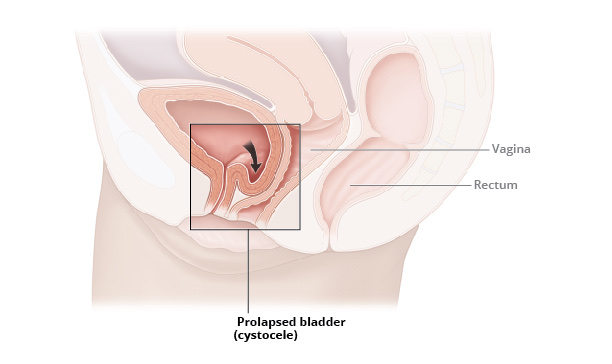
Pelvic organ prolapse happens when the support for the pelvic organs weakens. The bladder, the uterus or the rectum then presses into, or out of, the vagina, causing a bulge or a feeling of pressure.
- Main sign
- A bulge or pressure in the vagina
- Is it serious?
- It is not cancer, and it is rarely dangerous
- When to treat
- Usually only if it bothers you
What it is
Prolapse is named for the part that drops: the front wall (the bladder), the back wall (the rectum) or the top (the uterus, or the top of the vagina after a hysterectomy). It is very common and usually needs treatment only if it bothers you. The exception is a prolapse that keeps the bladder from emptying or blocks urine draining from the kidneys.
Common causes
- Pregnancy and vaginal birth
- Getting older
- Extra weight
- A family tendency
- Straining from constipation
- A long-term cough
Many people have more than one cause.
What you may notice
- A bulge you can see or feel at the vaginal opening
- Pelvic pressure or heaviness, often worse late in the day
- Trouble fully emptying the bladder or bowel
How it is diagnosed
-
Pelvic exam
Often while you bear down or stand, to see which parts drop and how far.
-
Questions about your body
About your bladder, your bowel and your sex life.
-
Bladder checks
Sometimes a check of how well your bladder empties, or bladder testing if you also leak urine.
Treatment choices
If prolapse does not bother you, you can simply watch it; if it does, the choices range from exercises to a pessary to surgery.
-
Pelvic floor exercises
Training the muscles that support the pelvic organs, ideally with a physical therapist.
- Best for
- Mild prolapse
- Recovery
- At least 4 months of daily exercises
-
Pessary
A soft, removable support placed in the vagina holds the organs up without surgery.
- Best for
- Anyone who wants to avoid or delay surgery
- Recovery
- Fitted in the office and taken out at least every 6 months
-
Vaginal repair with your own tissue
Stitches through the vagina tighten weak walls and lift the top, with no mesh and no belly cut.
- Best for
- Front, back or top prolapse, when you prefer no mesh
- Recovery
- Walk from the first day; a catheter may stay in briefly
-
Vaginal hysterectomy
The dropped uterus is removed through the vagina, and the top of the vagina is lifted.
- Best for
- Prolapse of the uterus
- Recovery
- Often home the same day or after one night
-
Sacrocolpopexy
Soft mesh placed through small belly cuts fixes the top of the vagina to the base of the spine.
- Best for
- Prolapse of the top of the vagina, often after a hysterectomy
- Recovery
- Often home the same day or the next day
-
Colpocleisis
Surgery through the vagina closes most of it, so the organs cannot drop out.
- Best for
- People sure they no longer want vaginal intercourse
- Recovery
- Mild soreness and some spotting afterward
What shapes the choice
- Which part drops
- How much it bothers you
- Your health and any earlier surgery
- Whether you want vaginal sex
- How you feel about mesh
- Recovery time
We can go over each option in more detail at your visit.
Make an appointment
Call (215) 456-4600 to schedule, or request a visit online.
Request an appointment online