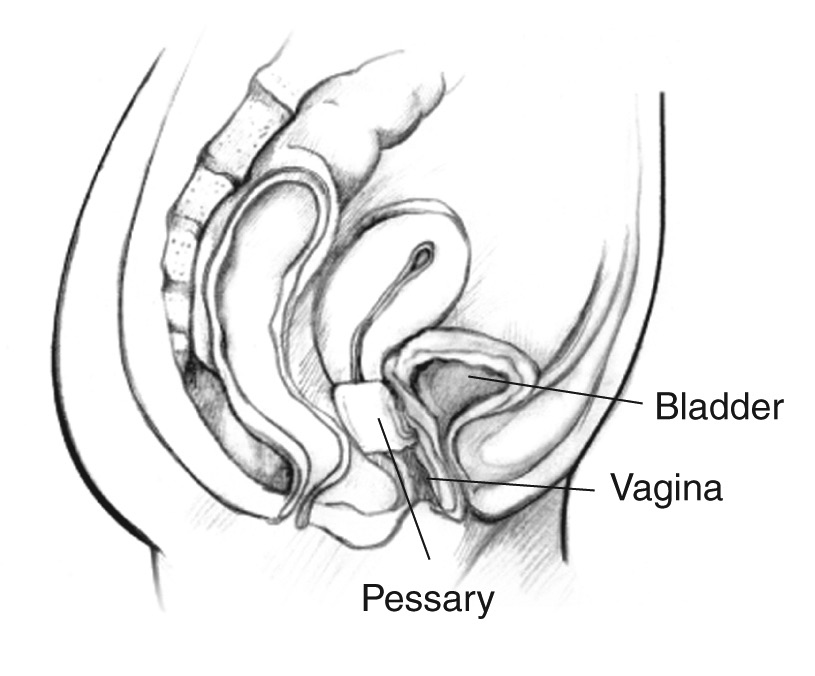
What it is
A pessary sits in the vagina and holds the dropped organs up. This eases the feeling of a bulge, heaviness or pressure. It may also help you empty your bladder more easily. Many people use one comfortably for years.
Who it suits
A pessary suits anyone who would rather avoid or delay surgery. A different kind, the continence pessary, is made to help with leaking when you cough or exercise.
Getting fitted
Pessaries come in many shapes and sizes. A ring is often tried first. Other shapes, such as the Gellhorn, fill more space and are used when a ring does not stay in.
We fit the pessary in the office. It may take more than one visit, or more than one size, to find the right one. A good fit stays in place, lets you urinate, and does not hurt. You should not feel it, and you can walk, work and exercise with it in. If it hurts, slips or falls out, the fit needs a change.
If the vaginal tissue is thin or dry, vaginal estrogen cream may lower irritation and sores. Not everyone needs it.
Caring for it
- On your own: many people learn to take it out, wash it with soap and water, and put it back. We will tell you how often.
- At the office: if you cannot remove it yourself, office visits clean it and check the tissue. These are often every few months. If taking it out hurts, a numbing cream can be used first.
Either way, the pessary comes out at least every 6 months.
A forgotten pessary can cause serious sores. If family members help with your care, make sure they know it is there.
What to expect
- More discharge is common, in about 1 to 3 in 10 users.
- A small sore on the vaginal wall from pressure (erosion) forms in about 2 to 7 in 100 users over a year. It often heals after the pessary is left out for a few weeks.
- Some people notice new leaking of urine once the prolapse is held up.
- Some types can stay in during sex. Others are taken out first.