What it is
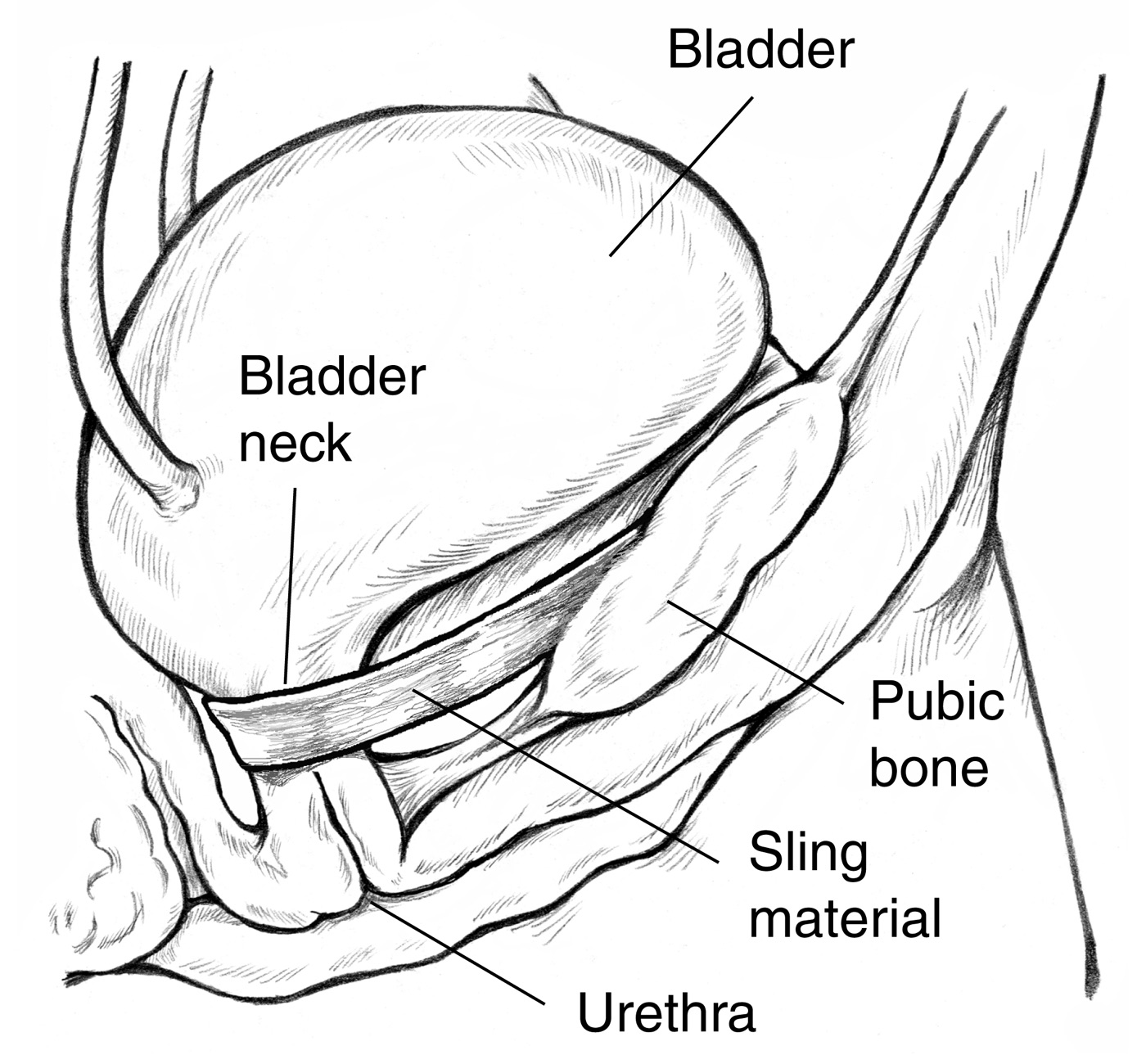
A fascial (pubovaginal) sling supports the urethra with a strip of your own tissue instead of synthetic mesh. Fascia is the tough, thin layer over muscle. The strip is usually taken from the side of the thigh, sometimes from over the belly muscles, through a separate cut. It is placed under the urethra through a small cut in the vagina, like a hammock. Its ends are tied through a small cut above the pubic bone.
Who it suits
A fascial sling may suit you if:
- You prefer no mesh
- Your urethra does not move much
- Earlier surgery did not work
- Another repair near the urethra is done at the same time
Compared with a mesh sling
Control of stress leaking is similar with both slings. A fascial sling avoids mesh, so there is no risk of mesh showing through the vaginal wall. It adds a second wound to heal, and the operation takes longer.
Getting ready
- Follow your surgery instructions about eating, drinking and which medicines to stop, including blood thinners.
- A urine test checks for infection. You may also have bladder testing and a check of how well you empty.
- Tell your team if you may want to have a baby later or are planning weight-loss surgery.
- Also tell them if you have had pelvic surgery or radiation.
- Arrange a ride home.
How it is done
- You are asleep or numb from the waist down, and you get antibiotics.
- A strip of fascia is taken, usually from the side of the thigh.
- The strip is placed under the urethra and tied above the pubic bone.
- The surgeon looks inside your bladder with a thin camera to check for injury.
- A catheter drains your bladder for a short time.
Afterward
Some women have trouble emptying the bladder after a fascial sling and may need to use a catheter for a time. Urge leaking can continue after surgery. Tell your team if it does.