Conditions Kidney and ureter blockage
Ureteral stricture and injury
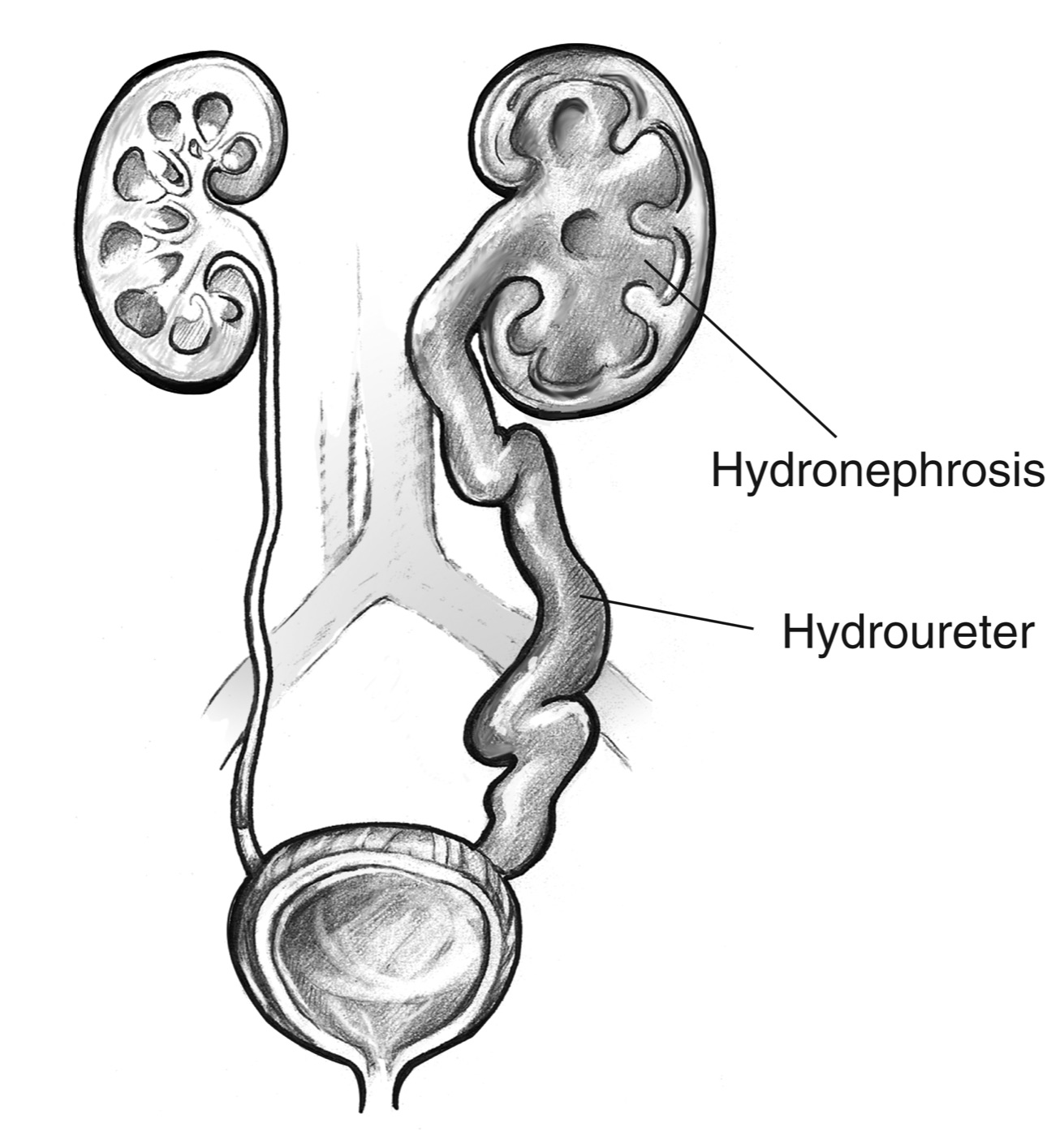
A ureteral stricture is a scarred, narrow spot in the ureter, the tube that carries urine from the kidney to the bladder. Urine trapped behind it can harm the kidney.
- Most common causes
- Kidney stones and earlier surgery
- Main risk
- Trapped urine can harm the kidney, often silently
- Repair success
- About 9 in 10 with its own ends or a cheek graft
What it is
A narrowing can harm the kidney for months before it causes symptoms. Until it is repaired, a stent or a kidney drainage tube in the back often keeps urine draining. Treatment through a scope alone keeps about 1 in 2 strictures open.
Common causes
- Kidney stones, or procedures to remove them
- Surgery in the belly or pelvis, such as a hysterectomy, cesarean section or colon surgery
- An injury to the ureter
- Radiation for cervical, prostate or rectal cancer
- A kidney transplant
- Swelling and scar around the ureter, as with endometriosis or retroperitoneal fibrosis
Sometimes something presses on the ureter from outside. Sometimes no cause is found.
What you may notice
- Pain in the side or back
- Urine infections that keep coming back, or blood in the urine
- No symptoms, found on a scan
How it is diagnosed
-
Scans
An ultrasound, CT or MRI shows where urine is backing up and can show why.
-
Kidney drainage scan
A scan with a small tracer injection (MAG3) measures how much work each kidney does.
-
A close look while you are asleep
Maps where the narrowing is, how long it is and how tight it is.
What the exam involves
Treatment choices
The repair is matched to where the narrowing is and how long it is.
-
Rejoining the ureter
The scar is removed and the healthy ends are joined, or the ureter gets a new bladder connection.
- Best for
- A short stricture
- Recovery
- A stent holds the repair open for several weeks
-
Cheek graft repair
The narrow part is opened and patched with lining from inside your cheek.
- Best for
- A longer stricture
- Recovery
- Cheek soreness usually improves over 1 to 2 weeks
-
Bowel replacement
A short piece of your own bowel bridges the missing part of the ureter.
- Best for
- Very long damage, with good kidney function and a healthy bowel
- Recovery
- The bowel takes a few days to start working again
-
Stent or kidney tube
A thin tube drains urine, from inside the ureter or through the back into the kidney.
- Best for
- Draining the kidney before a repair, or while one heals
- Recovery
- Short-term stents usually come out within about 6 weeks
What shapes the choice
- Where the narrowing is
- How long it is
- What caused it
- Earlier surgery or radiation
- How well the kidney works
- Your health
We can go over each option in more detail at your visit.
Make an appointment
Call (215) 456-4600 to schedule, or request a visit online.
Request an appointment online