What it is
Until a stricture is repaired, a tube often keeps urine draining so the kidney is protected. There are two kinds:
- A ureteral stent is a thin, soft tube inside your body. It runs from the kidney down to the bladder. Each end is curled to hold it in place, and nothing shows on the outside unless it has a string.
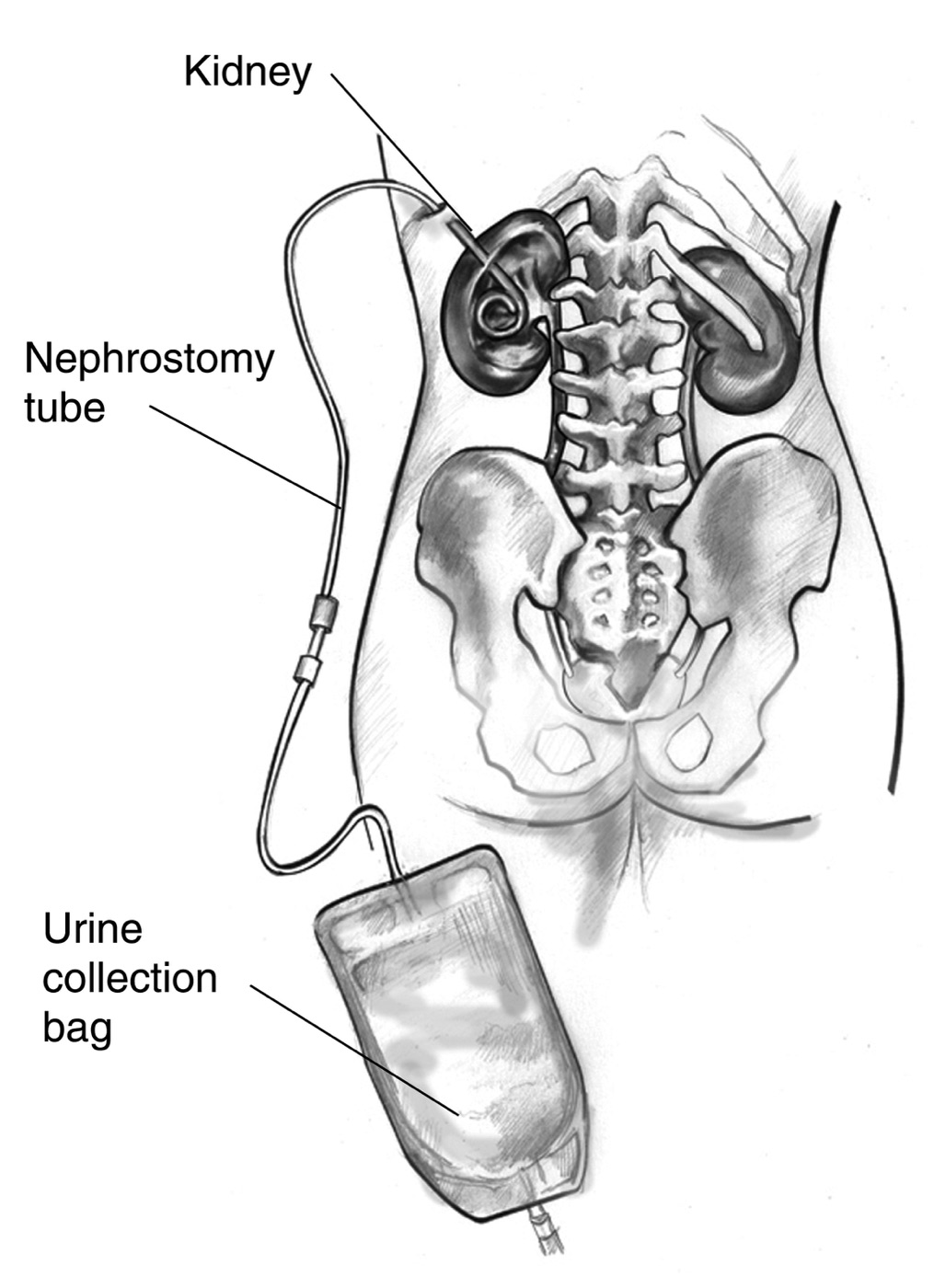
- A kidney drainage tube (nephrostomy) is placed through the back straight into the kidney.
Why it is used
- To keep urine draining past a scar, or past something pressing on the ureter from outside
- To hold a repair open while it heals
- To rest the ureter before surgery. Your team may take out a stent, or swap it for a kidney tube in your back. This also shows the narrow spot more clearly.
A kidney tube lets dye be sent down from above during the exam that maps the narrowing. A stent or kidney tube may be placed or changed at that same visit.
How a stent is placed
A stent is usually placed through the urethra with a thin scope and X-ray. You are asleep or numb.
Living with a stent
- Going often, sudden urges, burning, and pink or blood-tinged urine that comes and goes are common.
- A side or kidney ache can come on when you pass urine or are active. Urine can flow back up the stent when you urinate.
- These symptoms usually stop once the stent is out.
- Drinking extra fluids for the first day or two helps. Your team may prescribe a medicine that relaxes the ureter (an alpha-blocker) or the bladder.
How a stent comes out
- Without a string: a short office visit. Numbing gel goes into the urethra, a thin flexible scope is passed into the bladder, and the stent is gently pulled out. It takes a few minutes, and you go home right after.
- With a string: pulling the string brings the whole stent out. Your team will tell you the day and whether you or they remove it. Most people can remove their own stent at home without trouble.
The removal date
A stent must never be forgotten. A stent left in too long can crust over, block the kidney, and cause infection or stones. It may then need a bigger operation to remove.
- Short-term stents usually come out within about 6 weeks.
- If you have not heard about removal within 4 to 6 weeks, contact the team that placed it.
- Before any other surgery or scan, tell the team that you have a stent and when it is due out.
Long-term stents
Some people need a stent for months or years, for example when something presses on the ureter from outside. These stents are changed on a schedule, and the time limit depends on the type of stent. Every change visit is kept, even when you feel well.
Rarely, a long-term stent wears into a nearby artery. This happens mostly after pelvic cancer surgery or radiation.