What it is
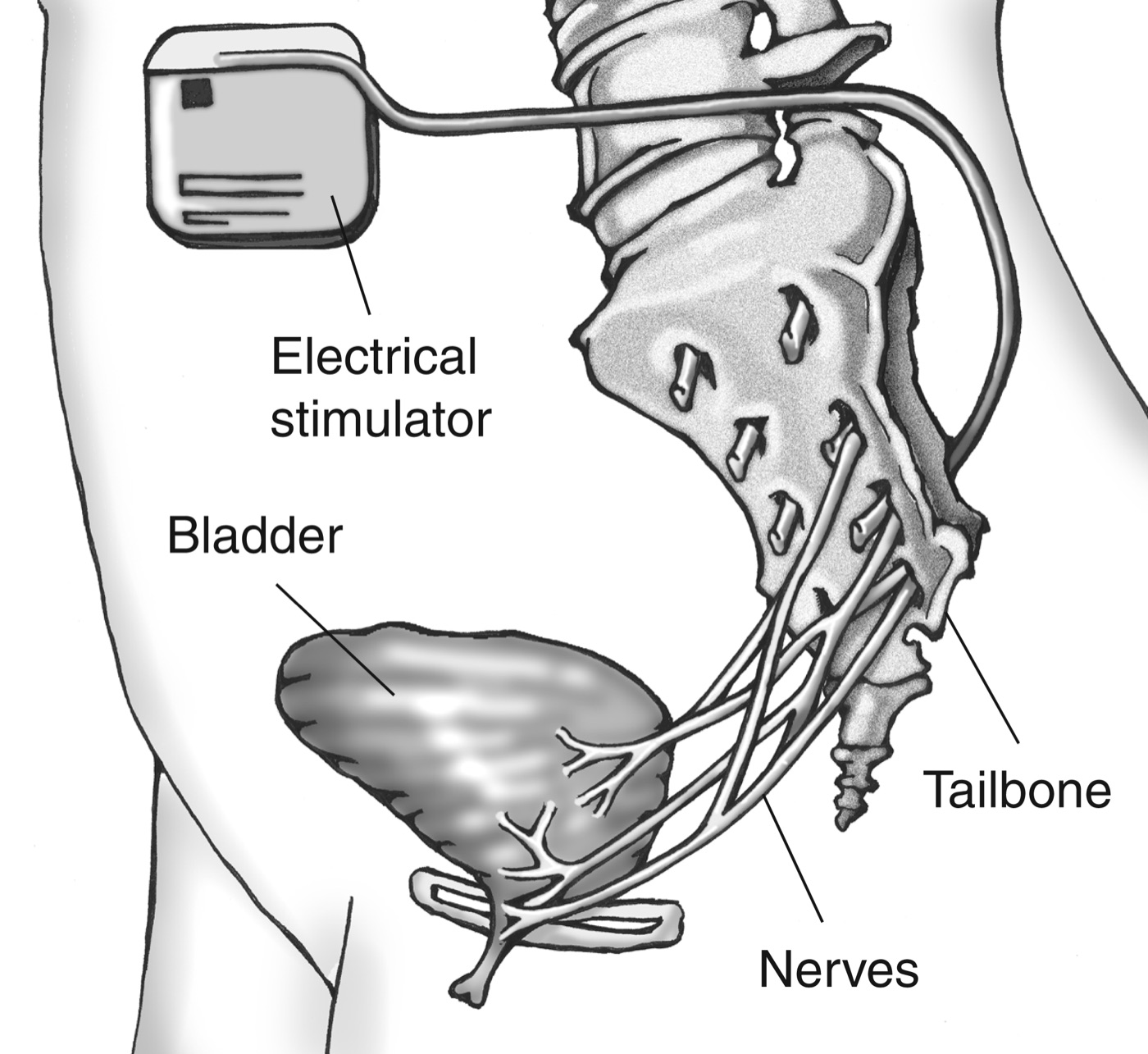
The sacral nerves near the tailbone carry signals between the bladder, the bowel and the brain. Sacral neuromodulation (SNM) sends mild electrical pulses that help steady those signals. This can calm urgency and leaks. You can adjust or pause it with a handheld remote.
What it treats
- Overactive bladder: urgency, frequent trips and urge leaks
- A bladder that will not empty, when a blockage is not the cause (urinary retention)
- Accidental bowel leakage (fecal incontinence)
You try it first
The permanent implant is placed only if the test clearly helps. During the test phase you track your symptoms in a diary for a few days to a few weeks. You move on to the implant if your symptoms improve by about half or more.
How it is done
- Test phase. A thin wire (lead) is placed near a sacral nerve, in the office or an operating room. You get numbing medicine, sometimes with medicine to relax you. The wire connects to a small device worn outside the body.
- Implant. If the test works, a small battery device (generator) is placed under the skin of the upper buttock and joined to the wire. You usually go home the same day.
- Programming. We program the device, and you use a remote to adjust it.
Living with the device
- Some batteries are recharged at home. Others last many years and are then replaced.
- Show your device card before any MRI. Many newer systems allow MRI scans under set conditions. Some older wires allow head scans only.
- Never have diathermy, a deep heat therapy.
- If you become pregnant, the device is often turned off. This is decided with you and your pregnancy care team.
- The device can be adjusted, turned off or removed.