Conditions Urinary incontinence
Urgency incontinence
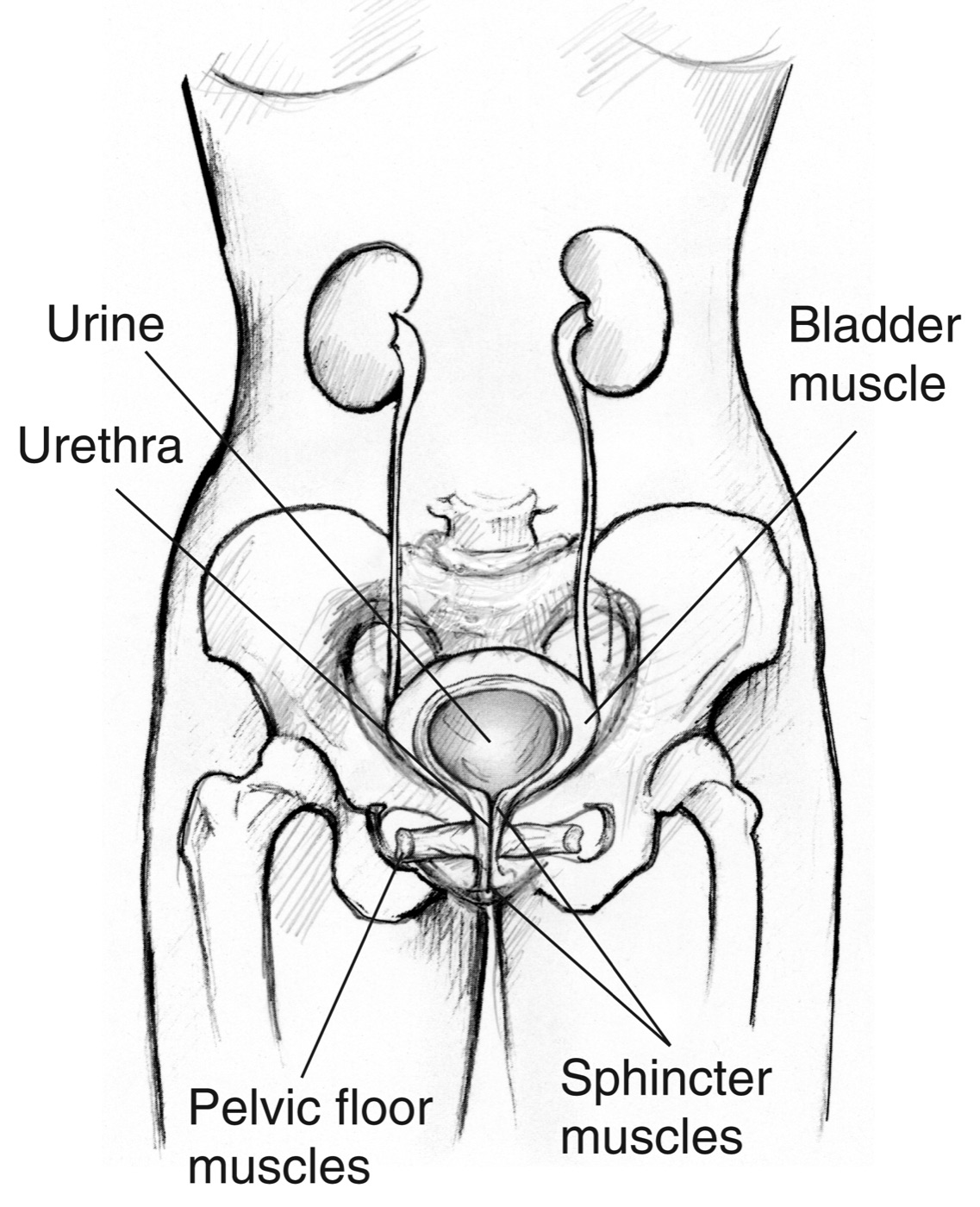
Urgency incontinence is leaking urine along with a sudden, strong need to go. It is part of overactive bladder (OAB), when the bladder muscle squeezes when it should not.
- Main sign
- A sudden urge, then leaking on the way
- Part of aging?
- No. It is common and can be treated.
- First step
- Bladder training and pelvic floor exercises
What it is
Normally the bladder fills calmly and tells you when it is getting full. With overactive bladder, it sends an urgent signal too early or too strongly. You may go often, wake at night to go, and leak before you reach the toilet.
Common causes
- Caffeine and alcohol
- Constipation
- Extra body weight
- Some medicines
- Menopause, in women
- A nerve condition, such as a stroke or Parkinson disease
Often there is no single cause. A urine infection can cause the same symptoms, so that is checked first. In men, an enlarged prostate can cause similar symptoms, and both can happen together.
What you may notice
- A sudden need to urinate that is hard to hold
- Going more than about 8 times a day, or waking at night to go
- Leaking on the way to the toilet
How it is diagnosed
-
Your symptoms and a bladder diary
A talk about your symptoms and a few days' log of drinks, toilet trips and leaks.
-
Urine test and bladder scan
Checks for infection or blood, and how well your bladder empties.
-
Sometimes bladder testing
Urodynamics or a look inside with a thin camera, if the cause is unclear or before a bigger treatment.
What urodynamics involves
Treatment choices
Treatment starts with daily habits, and medicines, Botox or nerve stimulation can be added when you need more help.
-
Bladder training and exercises
Daily pelvic floor squeezes and slowly longer gaps between toilet trips teach the bladder to wait.
- Best for
- Everyone, alone or alongside any other treatment
- Recovery
- At least 6 weeks of training and 3 months of exercises
-
Bladder medicines
A daily pill calms or relaxes the bladder muscle so it squeezes less often.
- Best for
- Urgency that training alone does not settle
- Recovery
- The benefit builds over several weeks
-
Bladder Botox
Injections through a thin camera relax the bladder muscle for months at a time.
- Best for
- When pills have not helped enough, or you prefer not to take them
- Recovery
- About 15 minutes in the office, home the same day
-
Tibial nerve stimulation
Gentle pulses to a nerve near the ankle calm bladder signals, from office visits or a small implant.
- Best for
- People who had pill side effects or want to avoid medicine
- Recovery
- Weekly 30-minute office visits for 12 weeks
-
Sacral neuromodulation
A small implant near the tailbone steadies the nerve signals to the bladder and bowel.
- Best for
- Urge leaks, with or without bowel leakage, after a successful trial
- Recovery
- A test phase first, then usually home the same day
What shapes the choice
- Your age and memory
- Your blood pressure
- Your other medicines
- Whether you could self-catheterize for a while
- How often you can come to the office
- What matters to you
We can go over each option in more detail at your visit.
Make an appointment
Call (215) 456-4600 to schedule, or request a visit online.
Request an appointment online