What it is
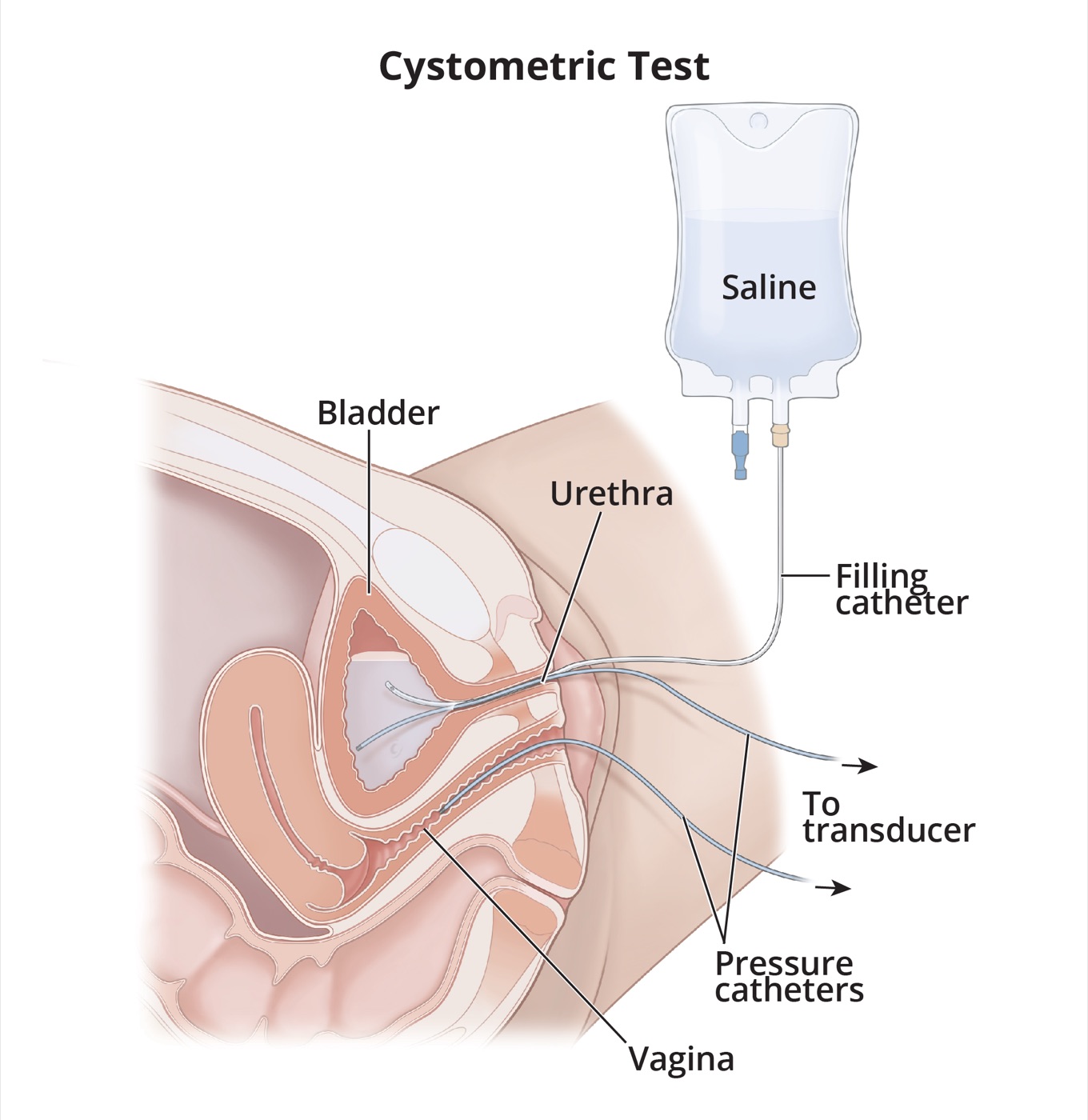
Urodynamics measures how well your bladder stores and releases urine. Thin, soft tubes (catheters) measure pressure while your bladder is slowly filled and then emptied. The goal is to recreate your symptoms in the office, so we can find the cause and plan the right treatment.
It is several tests done together. Depending on your needs, it may include:
- A flow test: you urinate into a special toilet that measures your stream, and then we check how much urine is left behind.
- A filling study: the bladder is slowly filled while pressure is measured and you say what you feel.
- A pressure-flow study: pressure is measured while you urinate.
- Video urodynamics: sometimes X-ray pictures are taken at the same time.
Getting ready
- You may be asked to arrive with a comfortably full bladder, because the test starts with you urinating.
- Eat and drink as usual unless told otherwise.
- Take your usual medicines, but ask whether to stop any bladder medicines first, since they can change the results.
- If you self-catheterize, ask whether to keep your usual schedule on the test day.
- You may be asked for a urine sample to check for infection.
No sedation is needed, so you can usually drive yourself home.
We need to know ahead of time if you have signs of a urine infection, because the test may need to be moved. We also need to know about a spinal cord injury, a narrowing of the urethra or surgery on it, an artificial urinary sphincter, a blood thinner, or any allergies, including latex. With a spinal cord injury, your blood pressure is watched during the test.
How it is done
The test often takes about 30 to 60 minutes, and you can go straight home.
- You urinate into a special toilet, and we check how much is left behind.
- Two thin catheters are gently placed. One goes in the bladder through the urethra. A very small one goes in the rectum or vagina to measure belly pressure, so bladder pressure can be told apart from straining.
- The bladder is slowly filled. You say when you first feel it and when you feel a strong urge. You will be asked to cough and change position.
- You urinate while the pressures are recorded. If you cannot go in the test room, that is still useful information.
- The catheters come out.
Most people feel pressure and some embarrassment rather than real pain. We keep you covered and work at your pace.
Is it safe?
Urodynamics is a low-risk test with no surgery. The main risks come from the catheters: brief burning, a small chance of a urine infection and, rarely, trouble urinating afterward. Most people rate the discomfort as low and say they would have the test again. Most people do not need an antibiotic. Some do, for example people with nerve-related bladder problems or a weak immune system.