Conditions Bladder
Neurogenic bladder
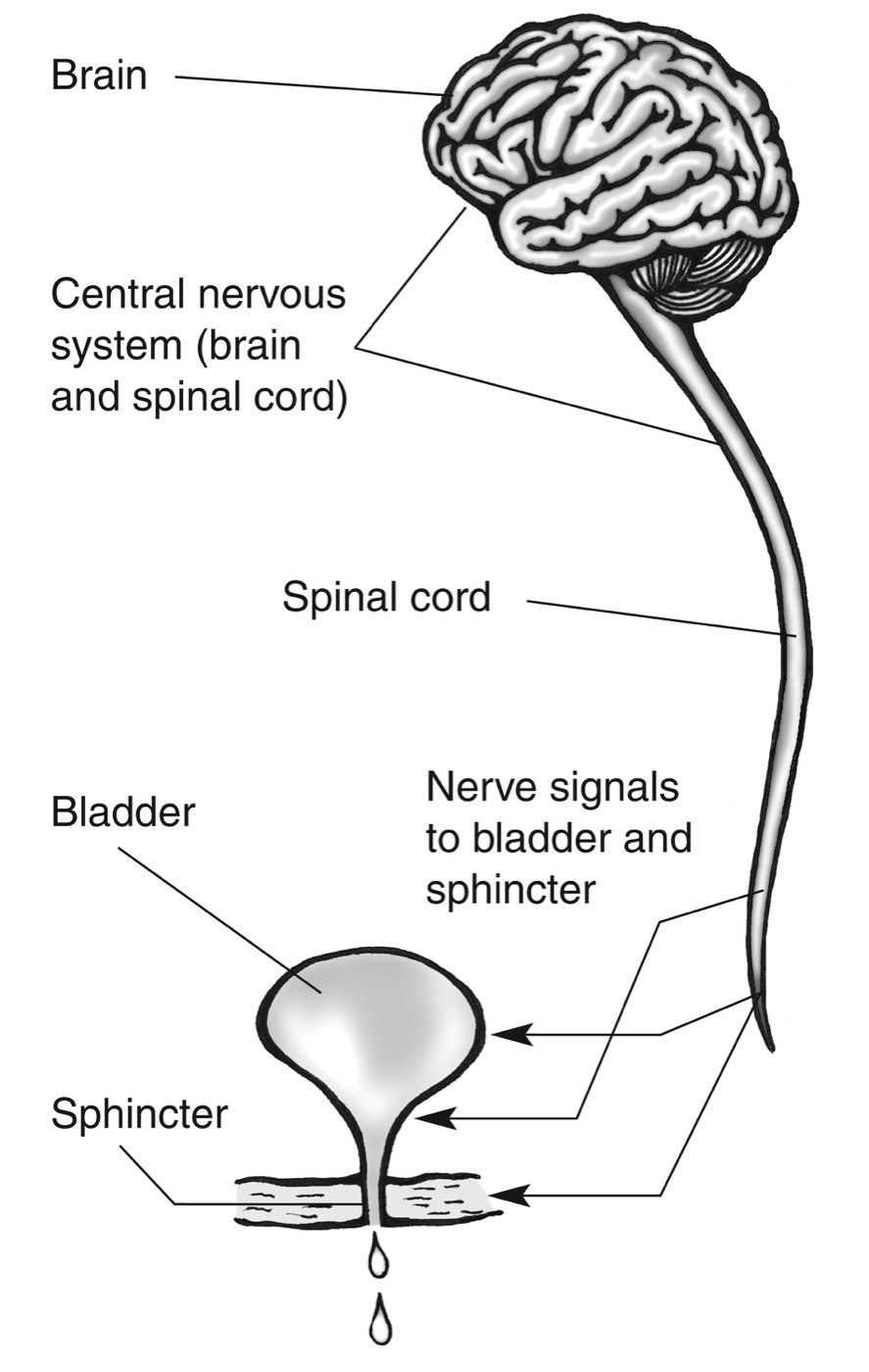
Neurogenic bladder is bladder trouble caused by a nerve condition, such as a spinal cord injury, multiple sclerosis (MS) or spina bifida. The bladder may squeeze too often, fail to empty, or hold urine under high pressure.
- Main goal
- Protecting the kidneys, even when you feel well
- Often the first way to empty
- Self-catheterization, often 4 to 6 times a day
- Kidney checks
- On a schedule, often every 1 to 2 years
What it is
Nerve conditions can change how the bladder fills and empties. High pressure inside the bladder can harm the kidneys without causing any symptoms. Care aims to protect the kidneys, keep you dry, prevent infections and fit your daily life.
Common causes
- Spinal cord injury
- Multiple sclerosis (MS)
- Spina bifida
- A stroke or Parkinson disease
- Nerve damage from diabetes or from pelvic surgery
With a spinal cord injury at T6 or above, a full bladder can trigger a sudden, dangerous rise in blood pressure (autonomic dysreflexia).
What you may notice
- Sudden urges and leaks
- Trouble emptying the bladder
- Urine infections that keep coming back
How it is diagnosed
-
Urodynamics
Measures bladder pressure as it fills and empties, to show whether the pressure is safe for the kidneys.
What urodynamics involves -
Kidney scan and blood test
Checks the kidneys now, and again on a schedule set by your risk.
About kidney checkups -
Bladder scan and urine test
Shows how much urine is left after you urinate, and checks for infection.
Treatment choices
Care has two parts, a safe way to empty the bladder and treatments that calm it, and surgery helps when these are not enough.
-
Self-catheterization
You or a helper pass a thin tube to drain the bladder, then remove it.
- Best for
- A bladder that cannot empty, when your hands or a helper allow
- Recovery
- A nurse teaches you; often 4 to 6 times a day
-
Suprapubic catheter
A tube through the lower belly drains to a bag and spares the urethra.
- Best for
- Long-term drainage when self-catheterization is not possible
- Recovery
- The tube is changed every 4 weeks
-
Bladder medicines
Pills that relax the bladder muscle reduce urges and leaks.
- Best for
- An overactive bladder from a nerve condition
- Recovery
- The benefit builds over several weeks
-
Bladder Botox
Injections into the bladder wall through a thin scope calm it for months at a time.
- Best for
- Urges and leaks that pills do not control
- Recovery
- Repeated when it wears off, often after about 8 months
-
Sacral nerve stimulation
An implant steadies bladder nerve signals. It is not usually used after a spinal cord injury or with spina bifida.
- Best for
- Urgency as the main problem, as in some people with MS
- Recovery
- A test phase first, then usually home the same day
-
Bladder augmentation
Surgery enlarges the bladder with a patch of bowel, often with a channel for catheterizing through the belly.
- Best for
- A small, high-pressure bladder despite medicines and Botox
- Recovery
- 5 days to 2 weeks in the hospital; about 6 weeks to recover
What shapes the choice
- Your hands and helpers
- Your bladder pressure
- Your kidney health
- Your nerve condition
- Your daily routine
- What matters to you
We can go over each option in more detail at your visit.
Make an appointment
Call (215) 456-4600 to schedule, or request a visit online.
Request an appointment online