Conditions Urinary diversion
Urinary diversion
A urinary diversion is a new path for urine to leave the body when the bladder is removed or no longer works. Each type uses a piece of your own bowel.
- Main types
- A bag, a new bladder, or a pouch you catheterize
- Most common type
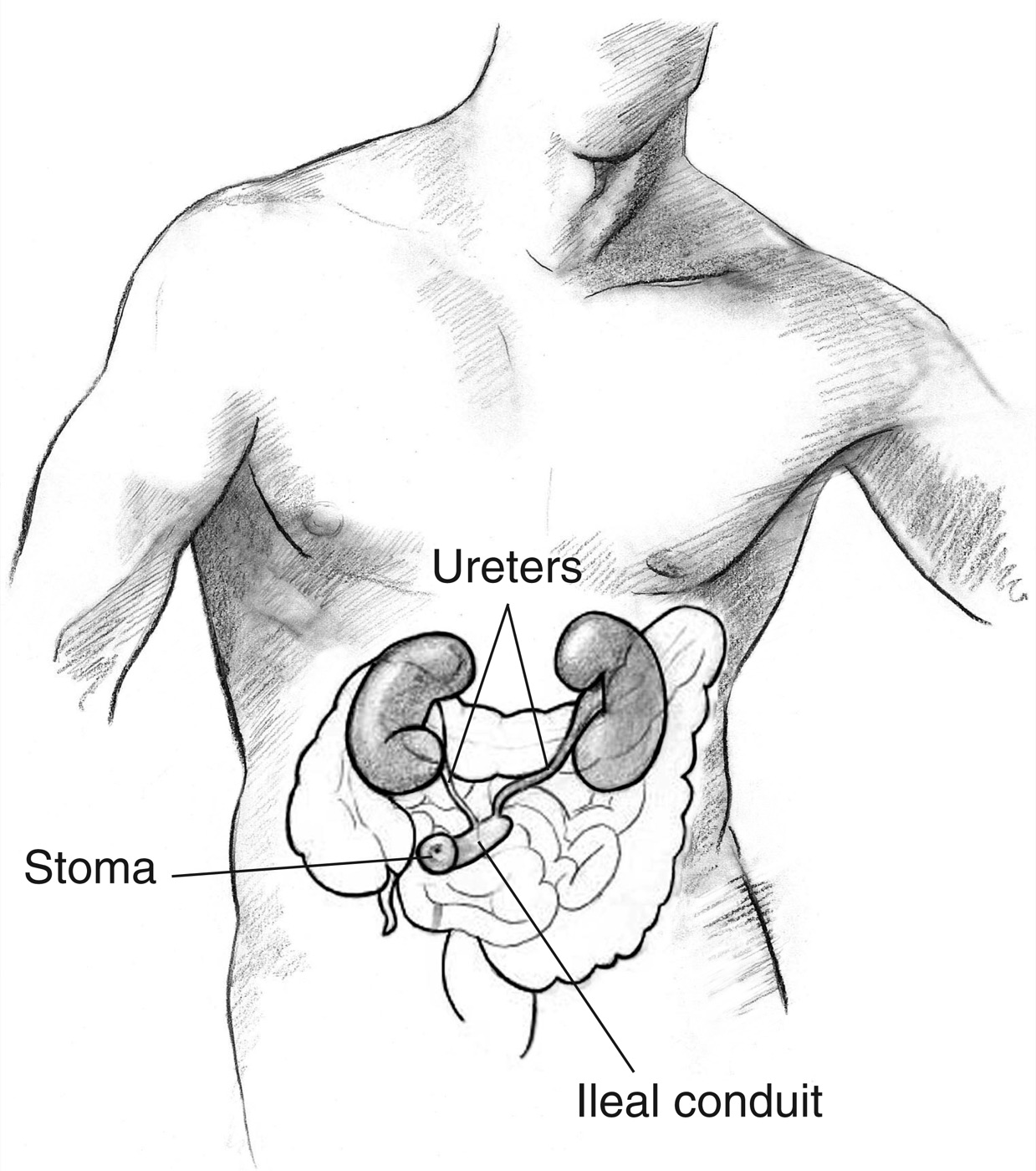
- Ileal conduit, which drains into a bag
- Needed for life
- Blood tests, kidney scans and check-ups
What it is
Urine can drain into a light bag on the belly, pass through the urethra from a new bladder, or be stored in an inside pouch that you empty with a catheter. The types differ most in daily care. Problems such as a narrowed stoma or a blocked ureter join can appear years later, and these can be treated with a scope or surgery.
Common causes
- Bladder removal, most often for bladder cancer
- Severe radiation damage to the bladder
- A bladder outlet that cannot be rebuilt after many repairs
- A bladder that does not work because of a nerve condition, when other options fail
- Bladder pain that other treatments have not helped
A diversion made years ago can also need repair, for example a narrowed stoma or a narrowed join between a ureter and the bowel.
What you may notice
- A bulge around the stoma, or a bag that will not seal
- A catheter that is hard to pass into a pouch
- Side pain or infections, though a blocked kidney often causes no symptoms
How it is diagnosed
-
Blood tests
Kidney and liver function help show which types are safe for you.
-
Planning daily care
An ostomy nurse marks the best stoma spot, and your team checks whether you can catheterize.
-
Check-ups for life
Blood tests and kidney scans find problems, such as a narrowed ureter join, before they cause symptoms.
Treatment choices
The three main types differ in how you empty urine each day, and problems with an existing diversion can be repaired.
-
Ileal conduit
A short piece of bowel carries urine to a stoma on the belly, where it drains into a bag.
- Best for
- The simplest surgery, with nothing to catheterize
- Recovery
- The bowel restarts over a few days; a nurse teaches bag care
-
Orthotopic neobladder
A new bladder made from bowel is joined to the urethra, so you urinate with no bag.
- Best for
- People who want no bag and can empty on a schedule, day and night
- Recovery
- A catheter while it heals, then practice to stay dry
-
Continent pouch (Indiana pouch)
A pouch inside stores urine, and you drain it with a catheter through a small opening.
- Best for
- People who want no bag and can catheterize for life
- Recovery
- A tube drains the pouch while it heals
-
Repair of a narrowed ureter join
Scar where a ureter joins the bowel is opened with a scope or rebuilt with surgery.
- Best for
- A kidney blocked where its ureter joins the diversion
- Recovery
- A stent holds the join open for several weeks
-
Stoma and channel repair
A narrowed stoma, a bulge beside it or a hard-to-catheterize channel is stretched, rebuilt or moved.
- Best for
- Stoma narrowing, a hernia, leaking or trouble passing the catheter
- Recovery
- After a channel stretch, a catheter often stays 1 to 2 weeks
What shapes the choice
- Your kidney and liver function
- Your bowel
- Your other health problems
- Whether you can catheterize
- The daily care that suits you
We can go over each option in more detail at your visit.
Make an appointment
Call (215) 456-4600 to schedule, or request a visit online.
Request an appointment online