What it is
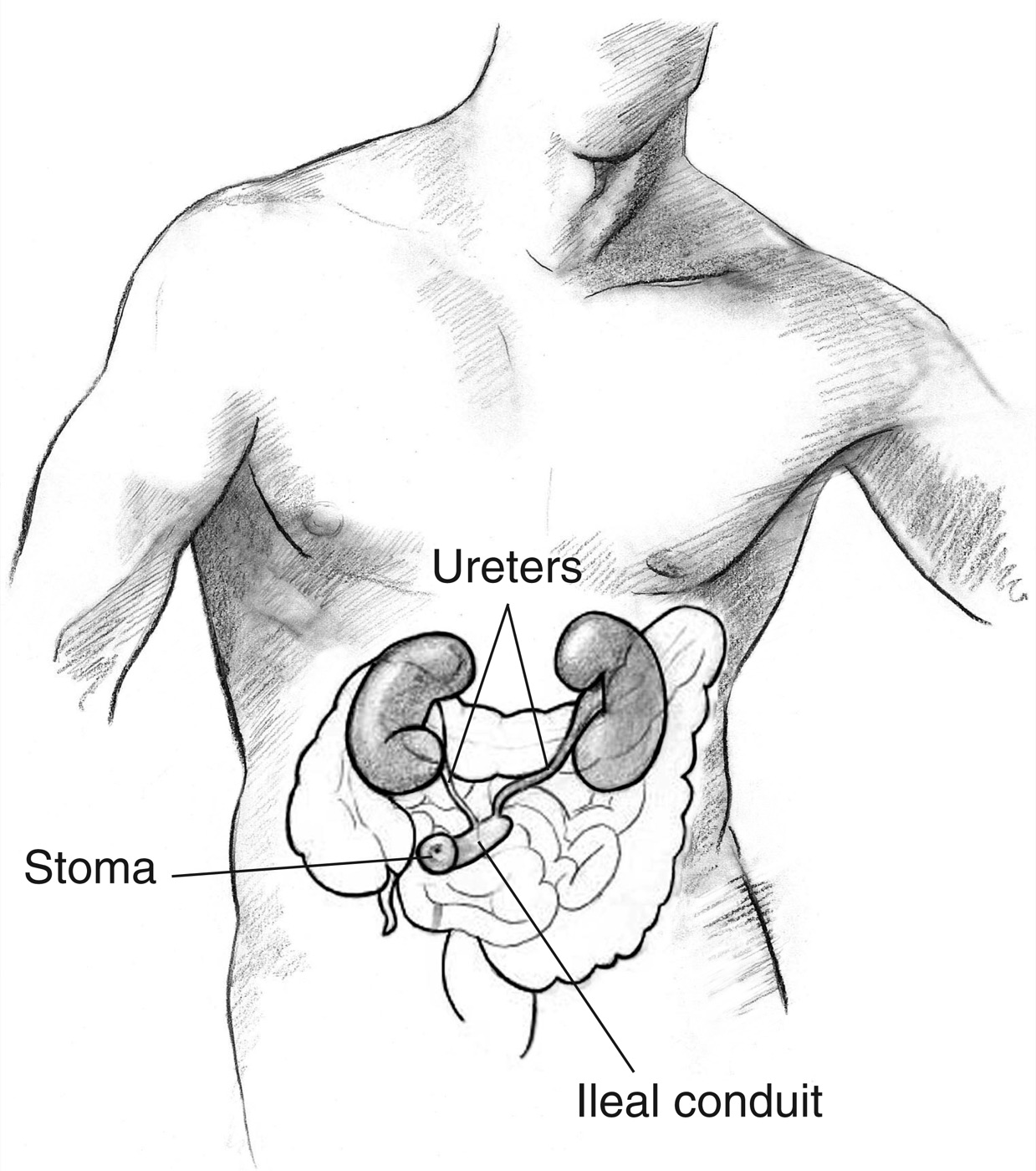
An ileal conduit is the most common diversion after bladder removal. A piece of small bowel about 6 to 8 inches long becomes a passageway. It does not store urine. The ureters, the tubes from the kidneys, are joined to it. One end is brought to the skin as a stoma, usually on the lower right belly.
Urine drains all the time, so you wear a pouch (an ostomy bag) over the stoma. You empty it during the day and change it every few days. There is nothing to squeeze and nothing to catheterize.
Who it suits
It is the simplest type and the smallest operation of the three main diversions. It suits people who want nothing to catheterize and are comfortable wearing a bag. Surgeons have used it for more than 70 years.
Getting ready
- Meet the ostomy nurse. The nurse marks the best spot for your stoma while you sit, stand and lie down. A good spot helps the bag fit without leaks.
- Follow your instructions about eating, drinking and which medicines to stop, including blood thinners. Many people no longer need a bowel prep.
- Stop smoking, since it slows healing, and arrange help at home.
- Tell your team if you have kidney or liver problems, bowel disease such as Crohn’s disease, or past belly surgery or radiation.
How it is done
- You are asleep and get antibiotics.
- A short piece of bowel is set aside, and the rest of the bowel is joined back together.
- The ureters are joined to the bowel piece.
- One end becomes the stoma. Thin tubes (stents) and a drain are placed while it heals.
Afterward
Your belly will be sore, and you get pain medicine. The bowel takes a few days to start working again, so you start with liquids. The stoma itself has no feeling. Medicine to prevent blood clots is usually given for about 4 weeks.
Like any major surgery, it has risks: bleeding, infection, blood clots, or a leak where the bowel or ureters are joined.
Living with it
- Mucus strands in the urine are normal.
- Drink plenty of fluids, and protect the skin around the stoma.
- Bacteria in a urine test are common with a conduit. They are treated only if you have symptoms.
- Using a piece of bowel can lower vitamin B12 over the years. Blood tests, including B12, and kidney checks continue for life, even when you feel well.