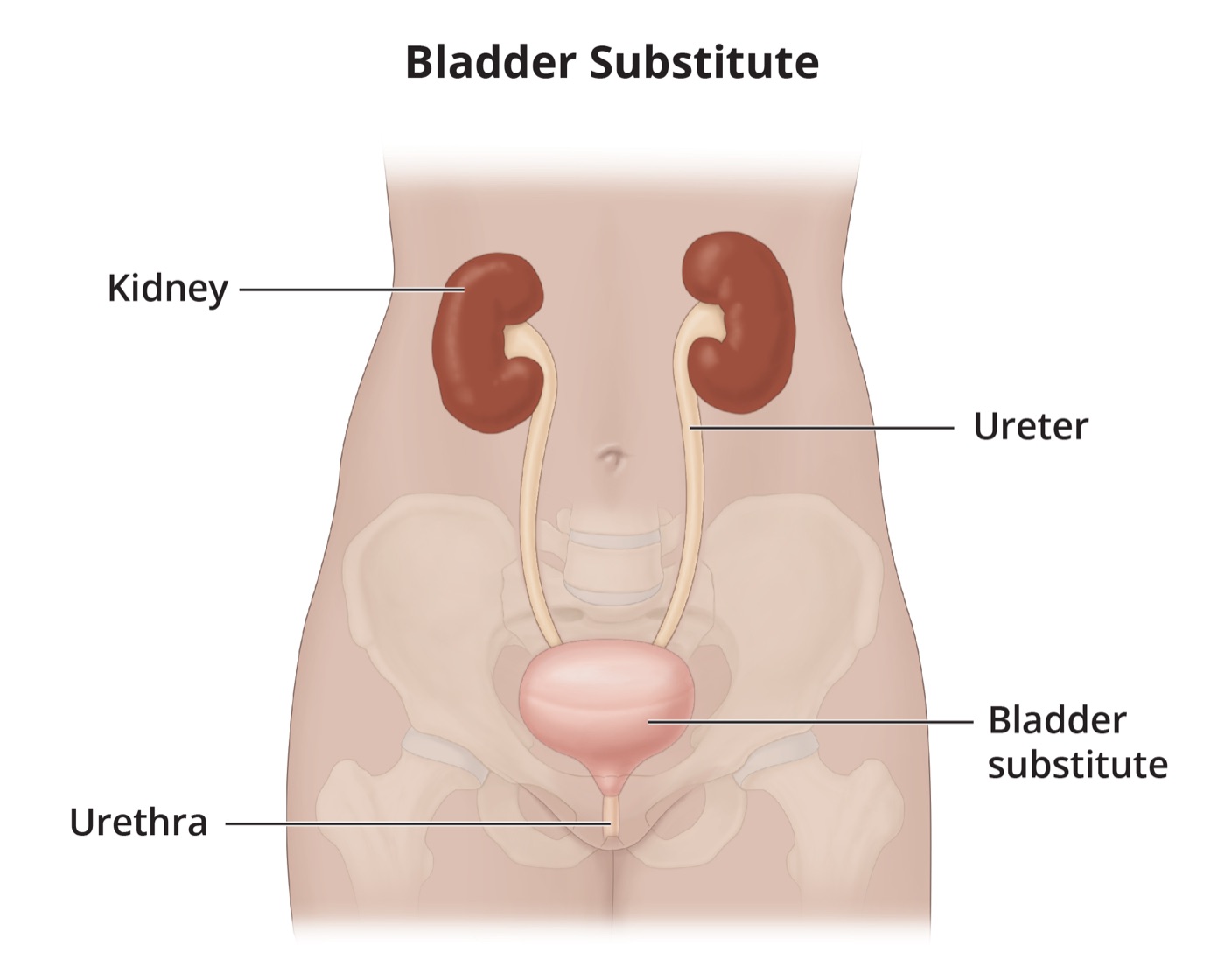
What it is
A piece of small bowel is opened and folded into a soft pouch. The pouch is joined to your urethra, and the ureters, the tubes from the kidneys, drain into it. There is no stoma and no bag.
Who it suits
A neobladder suits people who want no bag and can keep up a daily routine of timed emptying. Not everyone can have one:
- After cancer surgery, the cut edge of the urethra must be free of cancer.
- Kidney and liver function matter.
- So does your ability to manage the routine, including a catheter if one is needed.
It is a larger operation than an ileal conduit.
Learning to use it
The new bladder does not give the usual “need to go” feeling. It takes time and practice to empty it well and to stay dry. You learn to:
- Empty on a schedule, day and night, by relaxing your pelvic floor and gently pushing with your belly.
- Do pelvic floor exercises.
- Use a thin tube (catheter) to drain it if it does not empty fully. This is more common in women.
- Rinse out mucus as your team shows you. The bowel keeps making mucus for life.
Leaks, mostly at night, are common early and often improve.
Getting ready
- Follow your instructions about eating, drinking and which medicines to stop. Your team will tell you if you need a bowel prep.
- Stop smoking, and arrange help at home.
- Tell your team if you take a blood thinner, have kidney or liver problems, or have bowel disease or past belly or pelvic surgery or radiation.
How it is done
- You are asleep and get antibiotics.
- A piece of bowel is set aside, and the rest of the bowel is joined back together.
- The bowel is folded into a pouch and sewn to the urethra.
- The ureters are joined to the pouch. A catheter and stents stay in while it heals.
Afterward
Your belly will be sore, and you get pain medicine. The bowel takes a few days to start working again. You wake up with a catheter in the new bladder and thin stents in the ureters. Medicine to prevent blood clots is usually given for about 4 weeks.
Blood tests (kidney function, acid level, vitamin B12) and kidney scans continue for life, even when you feel well.