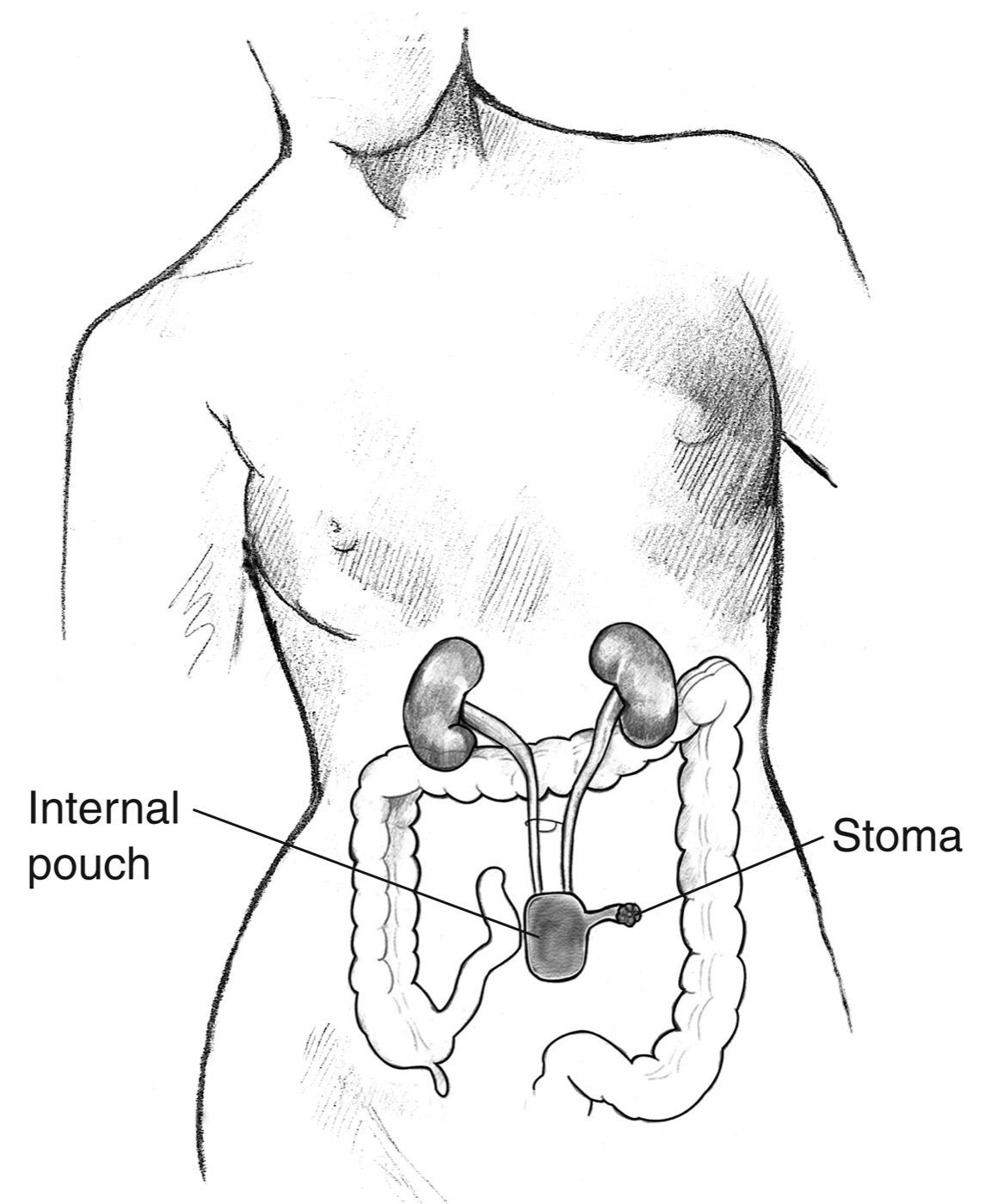
What it is
A piece of large and small bowel is reshaped into a soft pouch inside the belly. The ureters, the tubes from the kidneys, drain into it. A narrow channel with a one-way valve is brought to the skin as a small, flat stoma. It is sometimes placed in the belly button.
The stoma stays closed between uses. A small pad or bandage covers it, and there is no bag. The Indiana pouch is one well-known type of continent cutaneous diversion.
Who it suits
It suits people who want no bag, cannot have or do not want a neobladder, and can catheterize for life. That takes steady hands and good eyesight, or a helper. It is a larger operation than an ileal conduit.
Daily care
- You pass a catheter through the stoma to drain the pouch on a schedule your team sets. Many people end up emptying about every 4 to 6 hours in the day and once at night. Yours depends on how much the pouch holds.
- You rinse the pouch with salt water (irrigate) to clear mucus. The bowel keeps making mucus for life.
Getting ready
- Your team plans the stoma spot with you and makes sure you, or a helper, can catheterize for life.
- Follow your instructions about eating, drinking and which medicines to stop. Your team will tell you if you need a bowel prep.
- Stop smoking, and arrange help at home.
- Tell your team if you take a blood thinner, have kidney or liver problems, or have bowel disease or trouble with your hands or eyesight.
How it is done
- You are asleep and get antibiotics.
- A piece of bowel is set aside, and the rest of the bowel is joined back together.
- The bowel is shaped into a pouch, and a narrow channel with a valve is brought to the skin.
- The ureters are joined to the pouch. A tube and stents stay in while it heals.
Afterward
Your belly will be sore, and you get pain medicine. The bowel takes a few days to start working again. You wake up with a tube draining the pouch and thin stents in the ureters. Medicine to prevent blood clots is usually given for about 4 weeks.
Blood tests (kidney function, acid level, vitamin B12) and kidney scans continue for life, even when you feel well.